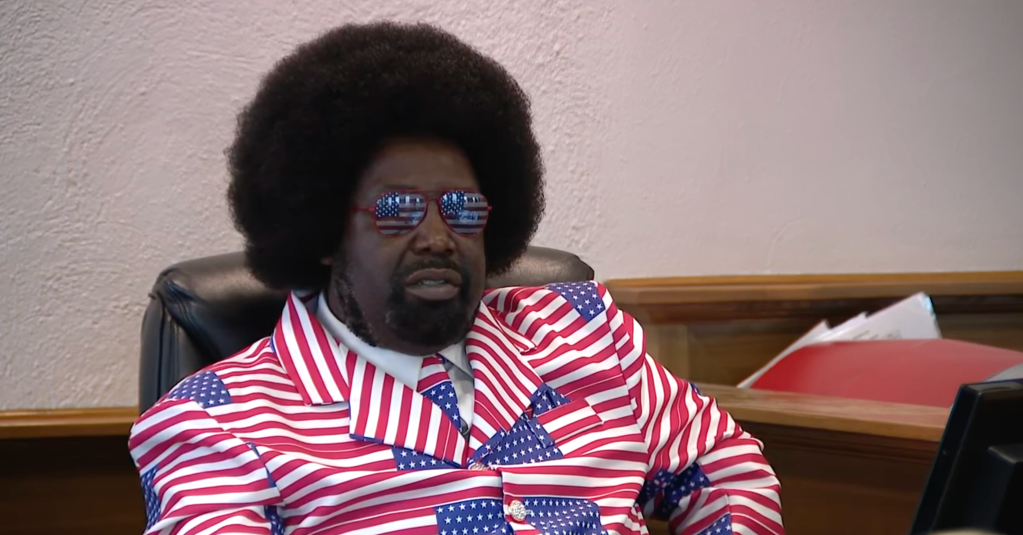
In an era where artists are constantly redefining how stories are told, Afroman has taken things further than most—turning a real-life police raid into a national conversation about rights, freedom, and accountability.
Once widely recognized for his hit “Because I Got High,” Afroman has stepped into a new role in recent years: an artist-activist standing on constitutional ground.
The 2022 Raid That Sparked It All
The story begins in 2022, when Afroman—born Joseph Edgar Foreman—became the subject of a police raid at his home in Adams County.
Law enforcement entered his property under a warrant tied to a kidnapping and drug trafficking investigation. According to Afroman’s account, officers kicked in doors, damaged his home, and conducted an extensive search.
What makes this case different is what happened next.
The entire incident was captured on Afroman’s own security cameras. The footage allegedly shows officers moving throughout the property, disconnecting surveillance systems, and searching through personal belongings.
Despite the intensity of the raid, no charges were filed.
No arrests. No apology. No accountability.
Afroman also claims that cash seized during the search was returned short—raising further concerns about how the situation was handled.
Turning Evidence Into Expression
Rather than staying silent, Afroman responded through music.
Using footage recorded inside his home, he released songs like:
-
“Why You Disconnecting My Video Camera”
-
“Will You Help Me Repair My Door?”
-
“Lemon Pound Cake”
These weren’t just songs—they were direct responses to what he experienced.
The videos quickly went viral, sparking debate. Supporters saw it as protected speech. Critics—particularly those involved—saw it as mocking and damaging.
The Legal Twist: Officers Sue Afroman
In a rare turn of events, several officers involved in the raid filed a lawsuit against Afroman.
They claim:
-
Defamation
-
Invasion of privacy
-
Emotional distress
The central issue? That Afroman used their likeness in his videos without consent.
Now, in 2026, Afroman is back in court—not as a suspect, but as a defendant defending his rights.
Constitutional Rights at the Center
Afroman’s defense heavily leans on the United States Constitution, particularly:
First Amendment
-
Protects freedom of speech and expression
-
Covers artistic expression, satire, and criticism
Fourth Amendment
-
Protects against unreasonable searches and seizures
-
Requires warrants to be specific and justified
Fourteenth Amendment
-
Ensures due process and equal protection under the law
The case raises major legal questions:
-
Can you use footage recorded inside your own home?
-
Do police have privacy rights while executing a warrant?
-
Where is the line between satire and defamation?
Back in Court, Louder Than Ever
Afroman hasn’t slowed down. He’s continuing to release music tied directly to the case, including:
-
“Freedom Of Speech”
-
“Licc’em Low Lisa”
-
“Shawn Groomin Grooms”
-
“Batteram Hymn Of The Police Whistle Blower”
-
“Brian Newland Is A Flag”
-
“Randy Walters Is A Son Of A Bitch”
-
“Judge Jackass Jonathan”
Each track acts as commentary—sometimes humorous, sometimes aggressive, but always direct.
A Case Bigger Than Music
This isn’t just about one artist.
It’s about:
-
Civil liberties
-
Government accountability
-
The power of independent media
And as Afroman stands in court, he’s not just defending himself—he’s testing the boundaries of constitutional rights in modern America.
More from Editorials
Lil Durk Shares Malcolm X Message Ahead of Upcoming Bond Hearing

Lil Durk is speaking through social media as he continues to await his next major court appearance. Ahead of his …

Cardi B Confirms Third Album Is Coming in 2027
Cardi B is already looking ahead to her next chapter. The Bronx superstar has confirmed that her third studio album …

Drake Shows Support for The Game’s The Documentary III With “No Brakes” Shoutout
Drake is showing love to The Game following the release of his highly anticipated album, The Documentary III. The Toronto …