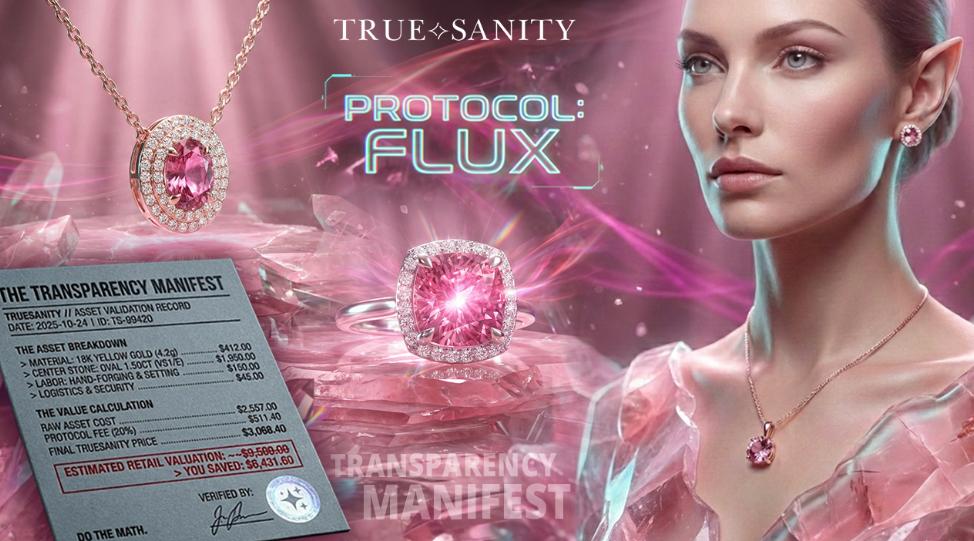
Lab-grown diamonds cost a fraction of what you pay. One brand decided to stop pretending otherwise.
A lab-grown diamond under magnification. Chemically identical. Optically identical. The price? Not even close.
There’s a number the jewelry industry really doesn’t want you to know about. So here it is: a lab-grown diamond costs approximately $100 to $200 per carat to produce. The same stone, chemically identical, optically identical, certified by the same grading labs, regularly sells at retail for $1,000 per carat or more. That’s not a markup. That’s a magic trick.
The trick works because most people never see the production side. They see the display case. They see the lighting designed to make stones flash. They see the sales associate who learned your name thirty seconds ago and is already talking about “investment pieces.” What they don’t see is the chasm between what that diamond cost and what’s printed on the tag, a gap so wide you could park a profit margin the size of a small country inside it.
The Science Is Real. The Price Is Fiction.
Lab-grown diamonds are not imitations. They are not cubic zirconia. They are not “diamond-like.” They are diamonds, produced through High-Pressure/High-Temperature (HPHT) or Chemical Vapor Deposition (CVD) processes that replicate the exact conditions under which natural diamonds form. The result is a stone with the same carbon crystal structure, the same hardness, the same refractive index, and the same fire. Gemological labs grade them on the same 4Cs: cut, color, clarity, and carat.
The only meaningful difference? Origin. One came from the earth over billions of years. The other came from a lab in weeks. And that difference in origin comes with a difference in production cost so dramatic that the retail pricing around lab-grown diamonds starts to look less like commerce and more like a confidence game.
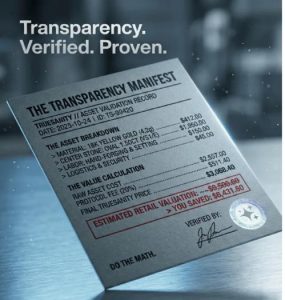
What you pay vs. what it costs. The gap the industry built its margins on.
The traditional defense is that you’re paying for “the experience,” “the brand,” and “the craftsmanship of the setting.” But Amit Jhalani, founder of TrueSanity, tested that theory the old-fashioned way. He bought competitors’ finished pieces. He took them apart. He weighed the gold. He appraised the stones. And the math didn’t come close to adding up. The experience, it turns out, was the experience of being overcharged.
Transparency as a Weapon
This is where TrueSanity diverges from every other brand in the space. Rather than quietly offering “better prices” and hoping you don’t ask too many questions, TrueSanity published its Transparency Manifest on all Diamond Rings, and all Products, and ethical sourcing commitments for anyone to read. Material costs. Labor. Margins. The full anatomy of what you’re buying, laid open.
The effect is disarming. When a brand volunteers the information that most competitors would rather you never see, it changes the power dynamic entirely. You’re no longer the mark in an asymmetric transaction. You’re a partner making an informed decision. And the jewelry doesn’t lose a single ounce of its beauty or emotional weight in the process. If anything, it gains something: trust.
Not Cheaper. Clearer.
TrueSanity isn’t positioning itself as the budget option. The pieces are luxurious—dark, moody, designed with the kind of edge that makes most legacy jewelers nervous. The brand’s nocturnal aesthetic feels closer to a fashion house than a diamond counter. But the pricing reflects honesty, not desperation. There’s a critical difference between being cheap and being fair, and TrueSanity has planted its flag firmly on the fair side of that line.
The lab-grown diamond market is projected to keep growing as consumers get savvier. But growth alone won’t fix the pricing problem, not if the same inflated margin structure simply migrates from natural stones such as Natural Emerald Rings to lab-grown ones. What fixes it is a brand willing to show its work. To build collections that prove luxury and transparency coexist. To treat the customer like an adult.
The $100 diamond doesn’t have to cost you $1,000. It just needs an industry that stops pretending it should and a brand honest enough to say so out loud.
The math was never complicated. Honesty was the hard part.
TrueSanity.com • Read the Transparency Manifest • Shop Lab-Grown Diamondsclea
More from Get To Know
Travis Scott Reportedly Purchases Four Classic Cars, Adding a Rare Lamborghini to His Collection
Travis Scott is expanding his automotive collection with a new set of vintage rides. The Houston rapper reportedly purchased four …

Megan Thee Stallion Turns Up The Heat With “Thin Ice” Tina Tuesday Freestyle
Megan Thee Stallion is keeping her momentum going with another installment of her Tina Tuesday freestyle series. The Houston rapper …
Doechii Unleashes Her Fierce Side On New Track “CATWOMAN (Swamp Sessions)”
Doechii is keeping fans engaged as she prepares for her highly anticipated debut album, returning with another installment of her …